Category: Blogs

  • Invasion of Yugoslavia (WWII)

    Invasion of Yugoslavia (WWII)

    The invasion of Yugoslavia, also known as the April War or Operation 25, was a German-led attack on the Kingdom of Yugoslavia by the Axis powers which began on 6 April 1941 during World War II. The order for the invasion was put forward in “Führer Directive No. 25”, which Adolf Hitler issued on 27 March 1941, following a Yugoslav coup d’état that overthrew the pro-Axis government.

    The invasion commenced with an overwhelming air attack on Belgrade and facilities of the Royal Yugoslav Air Force (VVKJ) by the Luftwaffe (German Air Force) and attacks by German land forces from southwestern Bulgaria. These attacks were followed by German thrusts from Romania, Hungary and the Ostmark (modern-day Austria, then part of Germany).

    The invasion ended when an armistice was signed on 17 April 1941, based on the unconditional surrender of the Yugoslav army, which came into effect at noon on 18 April. The Kingdom of Yugoslavia was then occupied and partitioned by the Axis powers. Most of Serbia and the Banat became a German zone of occupation while other areas of Yugoslavia were annexed by neighboring Axis countries, Germany, Hungary, Italy, Albania and Bulgaria. Croatia became the Independent State of Croatia (NDH), an Axis puppet state.

    Background

    In October 1940, Fascist Italy had attacked the Kingdom of Greece only to be forced back into Albania. German dictator Adolf Hitler recognized the need to go to the aid of his ally, Italian dictator Benito Mussolini.

    In 1940 and early 1941, Hungary, Romania, and Bulgaria all agreed to adhere to the Tripartite Pact and thus join the Axis. Hitler then pressured Yugoslavia to join as well.

    The Regent, Prince Paul, yielded to this pressure, and declared Yugoslavia’s accession to the Pact on 25 March 1941.

    This move was highly unpopular with the Serb-dominated officer corps of the military, Serbian organizations such as National Defense and the Chetniks Association, the Serbian Orthodox Church, a large part of the Serbian population as well as liberals and Communists.

    Military officers (predominantly Serbs) executed a coup d’état on 27 March 1941, forced the Regent to resign, and declared 17-year-old King Peter II to be of age.

    Thousands of demonstrators took to the streets of Belgrade shouting and carrying the slogans “Better war than pact”, “Better grave than slave”.

    Preparation

    Upon hearing news of the coup in Yugoslavia, Hitler called his military advisers to Berlin on 27 March. On the same day as the coup he issued Führer Directive 25, which called for Yugoslavia to be treated as a hostile state. Hitler took the coup as a personal insult, and was so angered that he was determined, in his words, “to destroy Yugoslavia militarily and as a state” and to do so “with pitiless harshness” and “without waiting for possible declarations of loyalty of the new government”.

    Axis order of battle

    The invasion was spearheaded by the German 2nd Army. The German force also included three well-equipped independent motorized infantry regiments and was supported by over 750 aircraft. The Italian 2nd Army and 9th Army committed a total of 22 divisions and 666 aircraft to the operation. The Hungarian 3rd Army also participated in the invasion, with support available from over 500 aircraft.

    Germany attacked Yugoslavia from bases in three countries besides itself: Hungary, Romania, and Bulgaria. German troops entered each of these countries under different pretenses and at different times. The first country to receive a German military mission was Romania. Ostensibly to train the Romanian armed forces, its real purpose was to protect Romania’s petroleum resources and prepare for an attack on the Soviet Union.

    Royal Yugoslav armed forces

    The Yugoslav forces consisted of more than 33 divisions of the Royal Yugoslav Army (VKJ), four air brigades of the Royal Yugoslav Air Force (VVKJ) with more than 400 aircraft, and the small Royal Yugoslav Navy (KJRM) centered around four destroyers and four submarines based on the Adriatic coast and some river monitors on the Danube. The VKJ was heavily reliant on animal-powered transport, was only partly mobilized at the time of the invasion, and had only 50 tanks that could engage German tanks on an equal basis. The VVKJ was equipped with a range of aircraft of Yugoslav, German, Italian, French and British design, including less than 120 modern fighter aircraft.

    Bombing of Belgrade

    At 07:00 on 6 April the Luftwaffe opened the assault on Yugoslavia by conducting a saturation-type bombing raid on the capital, “Operation Retribution”.

    Flying in relays from airfields in Austria and Romania, 300 aircraft, of which a quarter were Junkers Ju 87 Stukas, protected by a heavy fighter escort began the attack.

    The dive-bombers were to silence the Yugoslav anti-aircraft defences while the medium bombers consisting mainly Dornier Do 17s and Junkers Ju 88 attacked the city. The initial raid was carried out at 15-minute intervals in three distinct waves, each lasting for approximately 20 minutes. Thus, the city was subjected to a rain of bombs for almost one and a half hours. The German bombers directed their main effort against the center of the city, where the principal government buildings were located. The medium bomber Kampfgruppen continued their attack on the city for several days while the Stuka dive bomber wings (Stukageschwader) were soon diverted to Yugoslav airfields.

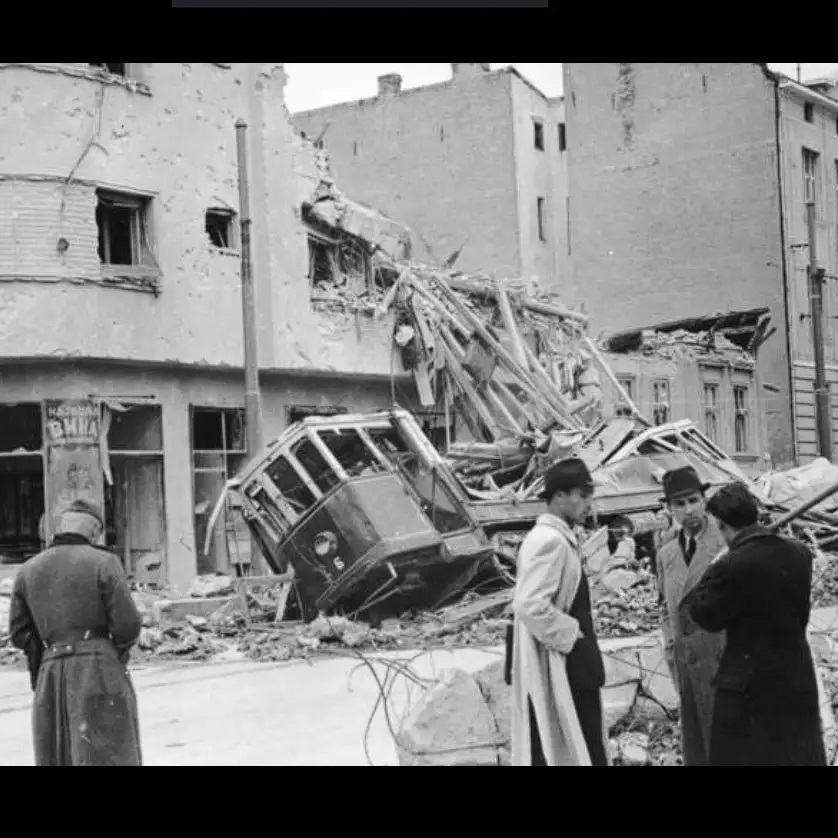
    When the attack was over, some 4,000 inhabitants lay dead under the debris. This blow virtually destroyed all means of communication between the Yugoslav high command and the forces in the field, although most of the elements of the general staff managed to escape to one of the suburbs.

    Having thus delivered the knockout blow to the Yugoslavian nerve center, the Luftwaffe was able to devote its maximum effort to military targets such as Yugoslav airfields, routes of communication, and troop concentrations, and to the close support of German ground operations.

    Ground operations

    The British, Greek and Yugoslav high commands intended to use Niš as the lynchpin in their attempts to wear down German forces in the Balkans and it is for this reason that the locality was important.

    Having reached Niš from its initial attacks from Bulgaria and broken the Yugoslav defences, the German 14th Motorized Corps headed north in the direction of Belgrade.

    On 11 April, a German Officer, Fritz Klingenberg with few men, moved into Belgrade to reconnoiter the city.

    The city, represented by the Mayor, surrendered to them at 18:45 hours on 12 April.

    Armistice and surrender

    The Axis victory was swift. As early as 14 April the Yugoslav high command had decided to seek an armistice and authorized the army and army group commanders to negotiate local ceasefires.

    Aftermath

    After the surrender, Yugoslavia was subsequently divided amongst Germany, Hungary, Italy and Bulgaria. Germany took control of most of Serbia. While Ante Pavelić, leader of the fascist Ustaše, declared an Independent State of Croatia before the invasion was even over, Croatia was actually under the joint control of Germany and Italy.

    When the Yugoslav Army officially surrendered to the Axis forces on 18 April 1941, Royal Yugoslav Army Colonel Draža Mihailović immediately began to organize a resistance to the occupying force in the mountains of Serbia and Eastern Bosnia. They were known as “Chetniks”.

    Once the Soviets fully entered the war on the side of the Allies on 22 June 1941, the Yugoslav Partisans under Josip Tito also began to fight the Axis powers, and from then on there was continuous resistance to the occupying armies in Yugoslavia until the end of the war. British and American governments supported the Partisans.

    ******************************** SERBIAN ********************************

    Invazija na Jugoslaviju (Drugi svetski rat)

    Invazija na Jugoslaviju, poznata i kao Aprilski rat ili Operacija 25, bio je napad sila Osovine na Kraljevinu Jugoslaviju predvođen Nemačkom koji je počeo 6. aprila 1941. tokom Drugog svetskog rata. Naredba za invaziju izneta je u “Firerovoj Direktivi br. 25”, koju je Adolf Hitler izdao 27. marta 1941, nakon jugoslovenskog državnog udara koji je zbacio pro-osovinsku vladu.

    Invazija je započela snažnim vazdušnim napadom na Beograd i objekte Kraljevskog jugoslovenskog ratnog vazduhoplovstva (VVKJ) od strane Luftvafea (nemačko vazduhoplovstvo) i napadima nemačkih kopnenih snaga iz jugozapadne Bugarske. Ove napade pratili su nemački udari iz Rumunije, Mađarske i Ostmarka (današnja Austrija, tada deo Nemačke).

    Invazija je okončana potpisivanjem primirja 17. aprila 1941. na osnovu bezuslovne predaje Jugoslovenske vojske, koje je stupilo na snagu u podne 18. aprila. Kraljevinu Jugoslaviju su tada okupirale i podelile sile Osovine. Veći deo Srbije i Banata postali su nemačka okupaciona zona, dok su ostala područja Jugoslavije pripojena susednim zemljama Osovine, Nemačkoj, Mađarskoj, Italiji, Albaniji i Bugarskoj. Hrvatska je postala Nezavisna Država Hrvatska (NDH), marionetska država Osovine.

    Pozadina

    Oktobra 1940. fašistička Italija je napala Kraljevinu Grčku samo da bi bila prisiljena da se vrati u Albaniju. Nemački diktator Adolf Hitler prepoznao je potrebu da priskoči u pomoć svom savezniku, italijanskom diktatoru Benitu Musoliniju.

    Godine 1940. i početkom 1941. Mađarska, Rumunija i Bugarska su se složile da se pridruže Trojnom paktu i tako pridruže Osovini. Hitler je tada vršio pritisak na Jugoslaviju da se i ona pridruži.

    Regent, knez Pavle, popustio je ovom pritisku i proglasio pristupanje Jugoslavije Paktu 25. marta 1941. godine.

    Ovaj potez bio je veoma nepopularan kod oficirskog korpusa kojim su dominirali Srbi, srpskih organizacija kao što su Narodna odbrana i Udruženje četnika, Srpske pravoslavne crkve, velikog dela srpskog stanovništva, kao i liberala i komunista.

    Vojni oficiri (pretežno Srbi) su 27. marta 1941. izvršili državni udar, primorali regenta da podnese ostavku i proglasili 17-godišnjeg kralja Petra II punoletnim.

    Na beogradske ulice je izašlo hiljade demonstranata uzvikujući i noseći parole “Bolje rat nego pakt”, “Bolje grob nego rob”.

    Priprema

    Pošto je čuo vesti o puču u Jugoslaviji, Hitler je 27. marta pozvao svoje vojne savetnike u Berlin. Istog dana nakon puča izdao je Firerovu Direktivu 25, kojom je tražio da se Jugoslavija tretira kao neprijateljska država. Hitler je državni udar shvatio kao ličnu uvredu i bio je toliko ljut da je bio odlučan, po njegovim rečima, da „vojno i kao državu uništi Jugoslaviju“ i da to učini „nemilosrdnom grubošću“ i „ne čekajući eventualne izjave lojalnosti nove vlade“.

    Borbeni red osovine

    Invaziju je predvodila nemačka 2. armija. Nemačke snage su takođe uključivale tri dobro opremljena nezavisna motorizovana pešadijska puka i bile su podržane sa preko 750 aviona. Italijanska 2. armija i 9. armija angažovale su u operaciji ukupno 22 divizije i 666 aviona. U invaziji je učestvovala i mađarska 3. armija, uz podršku od preko 500 aviona.

    Nemačka je napala Jugoslaviju iz baza u tri zemlje pored sebe: Mađarskoj, Rumuniji i Bugarskoj. Nemačke trupe su ušle u svaku od ovih zemalja pod različitim izgovorima i u različito vreme. Prva zemlja koja je primila nemačku vojnu misiju bila je Rumunija. Navodno za obuku rumunskih oružanih snaga, njegova prava svrha bila je zaštita rumunskih naftnih resursa i priprema za napad na Sovjetski Savez.

    Kraljevske jugoslovenske oružane snage

    Jugoslovenske snage su se sastojale od više od 33 divizije Vojske Kraljevine Jugoslavije (VKJ), četiri vazduhoplovne brigade Kraljevskog jugoslovenskog ratnog vazduhoplovstva (VVKJ) sa više od 400 aviona i male Kraljevske jugoslovenske mornarice (KJRM) sa centrom oko četiri razarača i četiri podmornice bazirane na jadranskoj obali i nekoliko rečnih monitora na Dunavu. VKJ se u velikoj meri oslanjala na transport na životinjski pogon, bila je samo delimično mobilisana u vreme invazije i imala je samo 50 tenkova koji su mogli da se bore protiv nemačkih tenkova na ravnopravnoj osnovi. VVKJ je bio opremljen nizom aviona jugoslovenskog, nemačkog, italijanskog, francuskog i britanskog dizajna, uključujući manje od 120 savremenih borbenih aviona.

    Bombardovanje Beograda

    U 07:00 6. aprila Luftvafe je započeo napad na Jugoslaviju izvodeći bombardovanje tipa zasićenja na glavni grad, “Operacija Retribution”.

    Leteći u štafetima sa aerodroma u Austriji i Rumuniji, 300 aviona, od kojih su četvrtina Junkers Ju 87 Stukas, zaštićeni teškom lovačkom pratnjom, započeli su napad.

    Ronilački bombarderi trebalo je da ućutkaju jugoslovensku protivvazdušnu odbranu, dok su srednji bombarderi, uglavnom Dornier Do 17 i Junkers Ju 88, napali grad. Početni napad je sproveden u intervalima od 15 minuta u tri različita talasa, od kojih je svaki trajao oko 20 minuta. Tako je grad bio podvrgnut kiši bombi skoro sat i po. Nemački bombarderi su svoje glavne napore usmerili protiv centra grada, gde su se nalazile glavne vladine zgrade. Srednji bombarder Kampfgruppen nastavio je napad na grad nekoliko dana, dok su krila ronilačkog bombardera Stuka (Stukageschvader) ubrzo preusmerena na jugoslovenske aerodrome.

    Kada je napad završen, oko 4.000 stanovnika je ležalo mrtvo ispod ruševina. Ovim udarom su praktično uništena sva sredstva veze između jugoslovenske vrhovne komande i snaga na terenu, iako je većina elemenata generalštaba uspela da pobegne u jedno od predgrađa.

    Pošto je na taj način zadao nokautirajući udarac jugoslovenskom nervnom centru, Luftvafe je bio u mogućnosti da posveti maksimalne napore vojnim ciljevima kao što su jugoslovenski aerodromi, rute komunikacija i koncentracija trupa, kao i bliskoj podršci nemačkim kopnenim operacijama.

    Kopnene operacije

    Britanske, grčke i jugoslovenske vrhovne komande nameravale su da iskoriste Niš kao oslonac u pokušajima da iscrpe nemačke snage na Balkanu i zbog toga je ovaj lokalitet bio važan.

    Došavši do Niša iz svojih početnih napada iz Bugarske i razbivši jugoslovensku odbranu, nemački 14. motorizovani korpus krenuo je na sever u pravcu Beograda.

    Dana 11. aprila, nemački oficir Fric Klingenberg sa nekoliko ljudi preselio se u Beograd da izviđa grad.

    Grad, koji je predstavljao gradonačelnik, predao im se 12. aprila u 18:45 časova.

    Primirje i predaja

    Pobeda Osovine je bila brza. Već 14. aprila jugoslovenska vrhovna komanda odlučila je da traži primirje i ovlastila komandante armija i armijskih grupa da pregovaraju o lokalnim prekidima vatre.

    Posledice

    Nakon predaje, Jugoslavija je potom podeljena između Nemačke, Mađarske, Italije i Bugarske. Nemačka je preuzela kontrolu nad većim delom Srbije. Dok je Ante Pavelić, vođa fašističkih ustaša, proglasio Nezavisnu Državu Hrvatsku pre nego što je invazija bila završena, Hrvatska je zapravo bila pod zajedničkom kontrolom Nemačke i Italije.

    Kada se 18. aprila 1941. godine Jugoslovenska vojska zvanično predala silama Osovine, pukovnik Kraljevske jugoslovenske vojske Draža Mihailović je odmah počeo da organizuje otpor okupatorskim snagama u planinama Srbije i istočne Bosne. Bili su poznati kao „četnici“.

    Kada su Sovjeti u potpunosti ušli u rat na strani Saveznika 22. juna 1941. godine, jugoslovenski partizani pod komandom Josipa Tita takođe su počeli da se bore protiv sila Osovine, i od tada je postojao neprekidan otpor okupatorskim vojskama u Jugoslaviji do kraja rat. Britanska i američka vlada podržale su partizane.

  • Thanksgiving

    Thanksgiving

    The American holiday (praznik) of Thanksgiving (Dan zahvalnosti) is celebrated every year on the fourth Thursday in November. The holiday is during autumn – the main season for harvesting crops (žetva useva). Thanksgiving is an autumn harvest festival like those found in many cultures around the world (širom sveta).

    On this day (na ovaj dan), most Americans gather with friends and family. Many take time to think about what they are thankful for, cook up a storm, and eat.

    The star (zvezda) of most Thanksgiving dinners is a roasted turkey (pečena ćurka). Turkeys are large birds native to North America.

    The turkey is cooked in an oven for many hours, often with a mix of celery, bread, onions and spices inside the bird. This mix becomes stuffing (nadev) – another star of the Thanksgiving dinner table.
    After the bird is cooked, the stuffing is taken out and served as a side dish (prilog).

    One of many side dishes. Families often make other foods like mashed potatoes (krompir pire), sweet potatoes (slatki krompiri), cranberry sauce (sos od brusnica) and vegetable casseroles (kaserole od povrća). A casserole (kaserola) is a dish that cooks slowly in an oven.

    And do not forget about the gravy (preliv). This rich sauce is made from the fatty liquid that comes off the turkey as it cooks. People cover their turkey meat (ćuretina), stuffing and mashed potatoes with gravy.

    The meal (obrok) does not end with the turkey, stuffing, and side dishes, though. For some people, the best part of the meal is dessert (desert).

    Typical Thanksgiving dessert is pie (pita). Pumpkin, cherry, apple or pecan pie are all great ways to finish off a Thanksgiving meal…if you are not too full of food by that point!

    Glossary:
    Thanksgiving – Dan zahvalnosti
    turkey (animal) – ćurka
    turkey (food) – ćuretina

  • History of Serbs

    History of Serbs

    Arrival of the Slavs

    Early Slavs, especially Sclaveni and Antae, including the White Serbs, invaded and settled Southeastern Europe in the 6th and 7th century. Up until the late 560s their activity was raiding, crossing from the Danube, though with limited Slavic settlement mainly through Byzantine foederati colonies. The Danube and Sava frontier was overwhelmed by large-scale Slavic settlement in the late 6th and early 7th century. What is today central Serbia was an important geo-strategical province, through which the Via Militaris crossed. This area was frequently intruded by barbarians in the 5th and 6th centuries. The numerous Slavs mixed with and assimilated the descendants of the indigenous population (Illyrians, Thracians, Dacians, Romans, Celts). White Serbs from White Serbia came to an area near Thessaloniki and then they settled area between Dinaric Alps and Adriatic coast. The region of “Rascia” (Raška) was the center of Serb settlement and Serb tribes also occupied parts of modern-day Herzegovina and Montenegro. Prior to their arrival to the Balkans, Serbs were predominantly involved in agriculture, which is why they settled in areas which were cultivated even during Roman times.

    Middle Ages

    The first Serb states, Raška and Duklja (825–1120), were formed chiefly under the Vlastimirović and Vojislavljević dynasties respectively. The other Serb-inhabited lands, or principalities, that were mentioned included the “countries” of Paganija, Zahumlje, Travunija. With the decline of the Serbian state of Duklja in the late 11th century, Raška separated from it and replaced it as the most powerful Serbian state. Prince Stefan Nemanja (r. 1169–96) conquered the neighbouring territories of Kosovo, Duklja and Zahumlje. The Nemanjić dynasty ruled over Serbia until the 14th century. Nemanja’s older son, Stefan Nemanjić, became Serbia’s first recognized king, while his younger son, Rastko, founded the Serbian Orthodox Church in the year 1219, and became known as Saint Sava (Sveti Sava) after his death. Parts of modern-day Montenegro, Bosnia and Herzegovina, and central Serbia would come under the control of Nemanjić.

    Over the next 140 years, Serbia expanded its borders, from numerous smaller principalities, reaching to a unified Serbian Empire. Its cultural model remained Byzantine, despite political ambitions directed against the empire. The medieval power and influence of Serbia culminated in the reign of Stefan Dušan, who ruled the state from 1331 until his death in 1355. Ruling as Emperor from 1346, his territory included Macedonia, northern Greece, Montenegro, and almost all of modern Albania. When Dušan died, his son Stephen Uroš V became Emperor.

    With Turkish invaders beginning their conquest of the Balkans in the 1350s, a major conflict ensued between them and the Serbs, the first major battle was the Battle of Maritsa (1371), in which the Serbs were defeated. With the death of two important Serb leaders in the battle, and with the death of Stephen Uroš that same year, the Serbian Empire broke up into several small Serbian domains. These states were ruled by feudal lords, with Zeta controlled by the Balšić family, Raška, Kosovo and northern Macedonia held by the Branković family and Lazar Hrebeljanović holding today’s Central Serbia and a portion of Kosovo. Hrebeljanović was subsequently accepted as the titular leader of the Serbs because he was married to a member of the Nemanjić dynasty. In 1389, the Serbs faced the Ottomans at the Battle of Kosovo on the plain of Kosovo Polje, near the town of Priština. Both Lazar and Sultan Murat I were killed in the fighting. The battle most likely ended in a stalemate, and afterwards Serbia enjoyed a short period of prosperity under despot Stefan Lazarević and resisted falling to the Turks until 1459.

    Early modern period

    The Serbs had taken an active part in the wars fought in the Balkans against the Ottoman Empire, and also organized uprisings; because of this, they suffered persecution and their territories were devastated – major migrations from Serbia into Habsburg territory ensued. After allied Christian forces had captured Buda from the Ottoman Empire in 1686 during the Great Turkish War, Serbs from Pannonian Plain (present-day Hungary, Slavonia region in present-day Croatia, Bačka and Banat regions in present-day Serbia) joined the troops of the Habsburg monarchy as separate units known as Serbian Militia. Serbs, as volunteers, massively joined the Austrian side.

    Many Serbs were recruited during the devshirme system, a form of slavery in the Ottoman Empire, in which boys from Balkan Christian families were forcibly converted to Islam and trained for infantry units of the Ottoman army known as the Janissaries. A number of Serbs who converted to Islam occupied high-ranking positions within the Ottoman Empire, such as Grand Vizier Sokollu Mehmed Pasha and Minister of War field marshal Omar Pasha Latas.

    In 1688, the Habsburg army took Belgrade and entered the territory of present-day Central Serbia. Louis William, Margrave of Baden-Baden called Serbian Patriarch Arsenije III Čarnojević to raise arms against the Turks; the Patriarch accepted and returned to the liberated Peć. As Serbia fell under Habsburg control, Leopold I granted Arsenije nobility and the title of duke. In early November, Arsenije III met with Habsburg commander-in-chief, General Enea Silvio Piccolomini in Prizren; after this talk he sent a note to all Serb bishops to come to him and collaborate only with Habsburg forces.

    A Great Migration of the Serbs (1690) to Habsburg lands was undertaken by Patriarch Arsenije III. The large community of Serbs concentrated in Banat, southern Hungary and the Military Frontier included merchants and craftsmen in the cities, but mainly refugees that were peasants. Smaller groups of Serbs also migrated to the Russian Empire, where they occupied high positions in the military circles.

    The Serbian Revolution for independence from the Ottoman Empire lasted eleven years, from 1804 until 1815. The revolution comprised two separate uprisings which gained autonomy from the Ottoman Empire that eventually evolved towards full independence (1835–1867). During the First Serbian Uprising, led by Duke Karađorđe Petrović, Serbia was independent for almost a decade before the Ottoman army was able to reoccupy the country. Shortly after this, the Second Serbian Uprising began. Led by Miloš Obrenović, it ended in 1815 with a compromise between Serbian revolutionaries and Ottoman authorities. Likewise, Serbia was one of the first nations in the Balkans to abolish feudalism. Serbs are among the first ethnic groups in Europe to form a nation and a clear sense of national identity.

    Modern period

    In the early 1830s, Serbia gained autonomy and its borders were recognized, with Miloš Obrenović being recognized as its ruler. Serbia is the fourth modern-day European country, after France, Austria and the Netherlands, to have a codified legal system, as of 1844. The last Ottoman troops withdrew from Serbia in 1867, although Serbia’s and Montenegro’s independence was not recognized internationally until the Congress of Berlin in 1878.

    Serbia fought in the Balkan Wars of 1912–13, which forced the Ottomans out of the Balkans and doubled the territory and population of the Kingdom of Serbia. In 1914, a young Bosnian Serb student named Gavrilo Princip assassinated Archduke Franz Ferdinand of Austria, which directly contributed to the outbreak of World War I. In the fighting that ensued, Serbia was invaded by Austria-Hungary. Despite being outnumbered, the Serbs defeated the Austro-Hungarians at the Battle of Cer, which marked the first Allied victory over the Central Powers in the war. Further victories at the battles of Kolubara and the Drina meant that Serbia remained unconquered as the war entered its second year. However, an invasion by the forces of Germany, Austria-Hungary and Bulgaria overwhelmed the Serbs in the winter of 1915, and a subsequent withdrawal by the Serbian Army through Albania took the lives of more than 240,000 Serbs. Serb forces spent the remaining years of the war fighting on the Salonika front in Greece, before liberating Serbia from Austro-Hungarian occupation in November 1918. Serbia suffered the biggest casualty rate in World War I.

    Following the victory in WWI Serbs subsequently formed the Kingdom of Serbs, Croats and Slovenes with other South Slavic peoples. The country was later renamed the Kingdom of Yugoslavia, and was led from 1921 to 1934 by King Alexander I of the Serbian Karađorđević dynasty. During World War II, Yugoslavia was invaded by the Axis powers in April 1941. The country was subsequently divided into many pieces, with Serbia being directly occupied by the Germans. Serbs in the Independent State of Croatia (NDH) were targeted for extermination as part of genocide by the Croatian ultra-nationalist, fascist Ustaše.

    The Ustaše view of national and racial identity, as well as the theory of Serbs as an inferior race, was under the influence of Croatian nationalists and intellectuals from the end of the 19th and the beginning of the 20th century. Jasenovac camp was notorious for the barbaric practices which occurred in it. Sisak and Jastrebarsko concentration camp were specially formed for children. Serbs in the NDH suffered among the highest casualty rates in Europe during the World War II, while the NDH was one of the most lethal regimes in the 20th century. Diana Budisavljević, a humanitarian of Austrian descent, carried out rescue operations from Ustaše camps and saved more than 15,000 children, mostly Serbs.

    More than half a million Serbs were killed in the territory of Yugoslavia during World War II. Serbs in occupied Yugoslavia subsequently formed a resistance movement known as the Yugoslav Army in the Homeland, or the Chetniks. The Chetniks had the official support of the Allies until 1943, when Allied support shifted to the Communist Yugoslav Partisans, a multi-ethnic force, formed in 1941, which also had a large majority of Serbs in its ranks in the first two years of war. Over the entirety of the war, the ethnic composition of the Partisans was 53 percent Serb. During the entire course of the WWII in Yugoslavia, 64.1% of all Bosnian Partisans were Serbs. Later, after the fall of Italy in September 1943, other ethnic groups joined Partisans in larger numbers.

    At the end of the war, the Partisans, led by Josip Broz Tito, emerged victorious. Yugoslavia subsequently became a Communist state. Tito died in 1980, and his death saw Yugoslavia plunge into economic turmoil. Yugoslavia disintegrated in the early 1990s, and a series of wars resulted in the creation of five new states. The heaviest fighting occurred in Croatia, Bosnia and Herzegovina, whose Serb populations rebelled and declared independence. The war in Croatia ended in August 1995, with a Croatian military offensive known as Operation Storm put a stop to the Croatian Serb rebellion and causing as many as 200,000 Serbs to flee the country. The Bosnian War ended that same year, with the Dayton Agreement dividing the country along ethnic lines. In 1998–99, a conflict in Kosovo between the Yugoslav Army and Albanians seeking independence erupted into full-out war, resulting in a 78-day-long NATO bombing campaign which effectively drove Yugoslav security forces from Kosovo. Subsequently, more than 200,000 Serbs and other non-Albanians fled the province. On 5 October 2000, Yugoslav President Slobodan Milosević was overthrown in a bloodless revolt after he refused to admit defeat in the 2000 Yugoslav general election.

  • Vampire – the only Serbian word used worldwide

    Vampire – the only Serbian word used worldwide


    A vampire is a mythical creature that subsists by feeding on the vital essence (generally in the form of blood) of the living. In European folklore, vampires are undead creatures that often visited loved ones and caused mischief or deaths in the neighborhoods which they inhabited while they were alive. They wore shrouds and were often described as bloated and of ruddy or dark countenance, markedly different from today’s gaunt, pale vampire which dates from the early 19th century. Vampiric entities have been recorded in cultures around the world; the term vampire was popularized in Western Europe after reports of an 18th-century mass hysteria of a pre-existing folk belief in Southeastern and Eastern Europe that in some cases resulted in corpses being staked and people being accused of vampirism. Local variants in Southeastern Europe were also known by different names, such as vrikolak in Greece and strigoj in Romania.

    In modern times, the vampire is generally held to be a fictitious entity, although belief in similar vampiric creatures (such as the chupacabra) still persists in some cultures. Early folk belief in vampires has sometimes been ascribed to the ignorance of the body’s process of decomposition after death and how people in pre-industrial societies tried to rationalize this, creating the figure of the vampire to explain the mysteries of death. Porphyria was linked with legends of vampirism in 1985 and received much media exposure, but has since been largely discredited.

    The charismatic and sophisticated vampire of modern fiction was born in 1819 with the publication of “The Vampyre” by the English writer John Polidori; the story was highly successful and arguably the most influential vampire work of the early 19th century. Bram Stoker’s 1897 novel Dracula is remembered as the quintessential vampire novel and provided the basis of the modern vampire legend, even though it was published after fellow Irish author Joseph Sheridan Le Fanu’s 1872 novel Carmilla. The success of this book spawned a distinctive vampire genre, still popular in the 21st century, with books, films, television shows, and video games. The vampire has since become a dominant figure in the horror genre.

    Vampire is the only word from the Serbian language that is generally accepted in all world languages (Serbian: Vampir).

    In various parts of the Slavic world, the vampire is also called by other names: vukodlak, lampir, lapir, vjedogonja, jedogonja, and most often – upir. The origin of the word vampire can be found from the latter. Namely, the ancient Slavs, like most ancient peoples, believed that if the body of a dead man is not burned, his soul will remain trapped in this world forever and will never find peace. That’s why they subjected their dead to “treatment” in which they burned them on a big pyre and thus sent them to the “eternal hunting grounds”. However, it happened (especially during wars or great diseases) that the body of a victim was not found at all and was not properly washed away, which allegedly led to the unfortunate person getting up at night and killing people. Until someone is found who will “treat” him with a hawthorn stake. They would stop coming out of their graves and killing people if someone pierced them with a hawthorn stake.

    Despite the occurrence of vampiric creatures in many ancient civilizations, the folklore for the entity known today as the vampire originates almost exclusively from early 18th-century southeastern Europe, when verbal traditions of many ethnic groups of the region were recorded and published. In most cases, vampires are revenants of evil beings, suicide victims, or witches, but they can also be created by a malevolent spirit possessing a corpse or by being bitten by a vampire. Belief in such legends became so pervasive that in some areas it caused mass hysteria and even public executions of people believed to be vampires.

    During the 18th century, there was a frenzy of vampire sightings in Eastern Europe, with frequent stakings and grave diggings to identify and kill the potential revenants. Even government officials engaged in the hunting and staking of vampires. Despite being called the Age of Enlightenment, during which most folkloric legends were quelled, the belief in vampires increased dramatically, resulting in a mass hysteria throughout most of Europe. The panic began with an outbreak of alleged vampire attacks in East Prussia in 1721 and in the Habsburg monarchy from 1725 to 1734, which spread to other localities. Two infamous vampire cases, the first to be officially recorded, involved the corpses of Petar Blagojević and Miloš Čečar from Serbia. Blagojević was reported to have died at the age of 62, but allegedly returned after his death asking his son for food. When the son refused, he was found dead the following day. Blagojević supposedly returned and attacked some neighbors who died from loss of blood.

    The two incidents were well-documented. Government officials examined the bodies, wrote case reports, and published books throughout Europe. The hysteria, commonly referred to as the “18th-Century Vampire Controversy”, continued for a generation. The problem was exacerbated by rural epidemics of so-called vampire attacks, undoubtedly caused by the higher amount of superstition that was present in village communities, with locals digging up bodies and, in some cases, staking them.

    The controversy in Austria ceased when Empress Maria Theresa sent her personal physician, Gerard van Swieten, to investigate the claims of vampiric entities. He concluded that vampires did not exist and the Empress passed laws prohibiting the opening of graves and desecration of bodies, ending the vampire epidemics. Other European countries followed suit. Despite this condemnation, the vampire lived on in artistic works and in local folklore.

    Glossary:
    vampire – vampir
    werewolf – vukodlak
    folk (noun) – narod
    folklore – folklor
    Eastern Europe – Istočna Evropa
    blood – krv

  • Halloween in Serbia

    Halloween in Serbia

    Halloween is not traditionally celebrated in Serbia to the extent that it is in some other countries, especially those with a strong Western cultural influence. However, in recent years, Halloween has gained some popularity, especially in larger cities, where you might find costume parties and decorations in some venues.
    It’s not a widely recognized or traditional holiday in Serbia, but you may come across Halloween-themed events or parties in certain areas, particularly in urban centers with a more international or Westernized culture.

    Halloween, which is increasingly celebrated in Serbia, has nothing to do with the culture and tradition of the Serbian people, nor with Orthodox Christianity, said one sociologist of religion, stressing that every culture should cherish its own traditions and respect those of others.
    “Halloween, perhaps, belongs more to some TV shows, but it should not be adopted by our children, nor by us. It is not a part of our tradition,” this person said.

    She pointed out that we should look at the origin of that tradition, where it comes from, what was done in connection with that holiday, what its intentions are and then see if it is in line with the traditions of the Serbian people.

    “I didn’t specifically study Halloween to know what it all means. I know that those holidays in our and every other culture that affirm goodness and love, freedom and peace among people, doing good deeds, and understanding and communication, belong to that glad tidings which is in Christianity; if they promote something else, then it is not compatible”, she emphasized.

    Speaking about the celebration of Valentine’s Day, which has taken off in Serbia, she says that there is a holiday in Orthodoxy that promotes the same values.

    She emphasized that it is very important for a person to know where they are from and what they have accepted as a system of values, and that in every culture there are good and bad things.

    She points out that it is important for people to know who they are and what they believe in, pointing out that everything comes from the family.

    “The family transmits those values to their children and they adopt them. When they meet others, they expand their boundaries a little, but when they stick to their values, they don’t stray. If the atmosphere is good and people love each other, they don’t give up their traditions, but if, for example, they experience violence or disappointment, then they look for alternatives in order to save themselves,” the expert explained.

    Halloween is celebrated on October 31, according to Western Christian tradition, the night before All Saints’ Day.

    Glossary:
    Halloween – Noć veštica
    holiday – praznik
    tradition – tradicija

  • Serbs

    Serbs


    The Serbs (Serbian Cyrillic: Срби, Latin: Srbi) are a South Slavic ethnic group native to Southeastern Europe who share a common Serbian ancestry, culture, history, and language.
    In the picture you can see Nikola Tesla and Novak Djokovic, perhaps the two most famous Serbs.

    They primarily live in Serbia, Kosovo, Bosnia, Croatia, Montenegro as well as in North Macedonia, Slovenia, Germany and Austria. They also constitute a significant diaspora with several communities across Europe, the Americas and Oceania.
    The Serbs share many cultural traits with the rest of the peoples of Southeast Europe. They are predominantly Eastern Orthodox Christians by religion. The Serbian language (a standardized version of Serbo-Croatian) is official in Serbia, co-official in Kosovo and Bosnia and Herzegovina, and is spoken by the plurality in Montenegro.

    The identity of Serbs is rooted in Eastern Orthodoxy and traditions. In the 19th century, the Serbian national identity was manifested, with awareness of history and tradition, medieval heritage, cultural unity, despite living under different empires.
    Three elements, together with the legacy of the Nemanjić dynasty, were crucial in forging identity and preservation during foreign domination: the Serbian Orthodox Church, the Serbian language, and the Kosovo Myth. When the Principality of Serbia gained independence from the Ottoman Empire, Orthodoxy became crucial in defining the national identity, instead of language which was shared by other South Slavs (Croats and Bosniaks). The tradition of slava, the family saint feast day, is an important ethnic marker of Serb identity, and is usually regarded their most significant and most solemn feast day.

  • Romanization of Serbian

    Romanization of Serbian

    The romanization of Serbian or latinization of Serbian is the representation of the Serbian language using Latin letters. Serbian is written in two alphabets, Serbian Cyrillic, a variation of the Cyrillic alphabet, and Gaj’s Latin, or latinica, a variation of the Latin alphabet. The Serbian language is an example of digraphia.
    Gaj’s Latin alphabet is widely used in Serbia. The two are almost directly and completely interchangeable. Romanization can be done with no errors, but in some cases knowledge of Serbian is required to do proper transliteration from Latin back to Cyrillic. Standard Serbian uses both alphabets currently. A survey from 2014 showed that 47% of the Serbian population favors the Latin alphabet whereas 36% favors Cyrillic; the remaining 17% preferred neither.
    Serbo-Croatian was regarded as a single language since the 1850 Vienna Literary Agreement, to be written in two forms: one (Serb) in the adapted Serbian Cyrillic alphabet; the other (Croat) in the adapted Croatian Latin alphabet, that is to say Gaj’s Latin alphabet.
    The Latin alphabet was not initially taught in schools in Serbia when it became independent in the 19th century. After a series of efforts by Serbian writers Ljubomir Stojanović and Jovan Skerlić, it became part of the school curriculum after 1914.
    During World War I, Austria-Hungary banned the Cyrillic alphabet in Bosnia and its use in occupied Serbia was banned in schools. Cyrillic was banned in the Independent State of Croatia in World War II. The government of socialist Yugoslavia made some initial effort to promote romanization, use of the Latin alphabet even in the Orthodox Serbian and Montenegrin parts of Yugoslavia, but met with resistance. The use of latinica did however become more common among Serbian speakers.
    In 1993, the authorities of Republika Srpska under Radovan Karadžić and Momčilo Krajišnik decided to proclaim Ekavian and Serbian Cyrillic to be official in Republika Srpska, which was opposed both by native Bosnian Serb writers at the time and the general public, and that decision was rescinded in 1994. Nevertheless, it was reinstated in a milder form in 1996, and today still the use of Serbian Latin is officially discouraged in Republika Srpska, in favor of Cyrillic.

    Foreign names
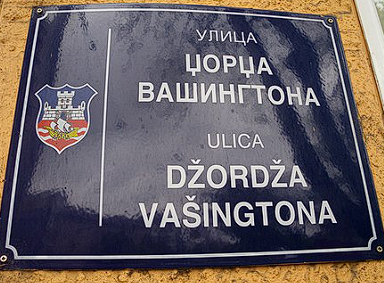
    In Serbian, foreign names are phonetically transliterated into both Latin and Cyrillic, a change that does not happen in Croatian and Bosnian (also Latin). For example, in Serbian history books George Washington becomes Džordž Vašington or Џорџ Вашингтон, Winston Churchill becomes Vinston Čerčil or Винстон Черчил and Charles de Gaulle Šarl de Gol or Шарл де Гол.

  • Serbian literature

    Serbian literature

    Serbian literature emerged in the Middle Ages, and included such works as Miroslavljevo jevanđelje (Miroslav’s Gospel) in 1186 and Dušanov zakonik (Dušan’s Code) in 1349. Little secular medieval literature has been preserved, but what there is shows that it was in accord with its time.
    For example, the Serbian Alexandride, a book about Alexander the Great, and a translation of Tristan and Iseult into Serbian. Although not belonging to the literature proper, the corpus of Serbian literacy in the 14th and 15th centuries contains numerous legal, commercial and administrative texts with marked presence of Serbian vernacular juxtaposed on the matrix of Serbian Church Slavonic.
    By the beginning of the 14th century the Serbo-Croatian language, which was so rigorously proscribed by earlier local laws, becomes the dominant language of the Republic of Ragusa. However, despite her wealthy citizens speaking the Serbo-Croatian dialect of Dubrovnik in their family circles, they sent their children to Florentine schools to become perfectly fluent in Italian. Since the beginning of the 13th century, the entire official correspondence of Dubrovnik with states in the hinterland was conducted in Serbian.
    In the mid-15th century, Serbia was conquered by the Ottoman Empire and for the next 400 years there was no opportunity for the creation of secular written literature. However, some of the greatest literary works in Serbian come from this time, in the form of oral literature, the most notable form being epic poetry. The epic poems were mainly written down in the 19th century, and preserved in oral tradition up to the 1950s, a few centuries or even a millennium longer than by most other “epic folks”. Goethe and Jacob Grimm learned Serbian in order to read Serbian epic poetry in the original. By the end of the 18th century, the written literature had become estranged from the spoken language. In the second half of the 18th century, the new language appeared, called Slavonic-Serbian. This artificial idiom superseded the works of poets and historians like Gavrilo Stefanović Venclović, who wrote in essentially modern Serbian in the 1720s. These vernacular compositions have remained cloistered from the general public and received due attention only with the advent of modern literary historians and writers like Milorad Pavić. In the early 19th century, Vuk Stefanović Karadžić promoted the spoken language of the people as a literary norm.

  • Serbian Language

    Serbian Language

    Serbian (srpski) is the standardized variety of the Serbo-Croatian language mainly used by Serbs. t is the official and national language of Serbia, one of the three official languages of Bosnia and Herzegovina and co-official in Montenegro and Kosovo. It is a recognized minority language in Croatia, North Macedonia, Romania, Hungary, Slovakia, and the Czech Republic.

    Standard Serbian is based on the most widespread dialect of Serbo-Croatian, Shtokavian (more specifically on the dialects of Šumadija-Vojvodina and Eastern Herzegovina), which is also the basis of standard Croatian, Bosnian, and Montenegrin varieties and therefore the Declaration on the Common Language of Croats, Bosniaks, Serbs, and Montenegrins was issued in 2017. The other dialect spoken by Serbs is Torlakian in southeastern Serbia, which is transitional to Macedonian and Bulgarian.
    Serbian is practically the only European standard language whose speakers are fully functionally digraphic, using both Cyrillic and Latin alphabets. The Serbian Cyrillic alphabet was devised in 1814 by Serbian linguist Vuk Karadžić, who created it based on phonemic principles. The Latin alphabet used for Serbian (latinica) was designed by the Croatian linguist Ljudevit Gaj in the 1830s based on the Czech system with a one-to-one grapheme-phoneme correlation between the Cyrillic and Latin orthographies, resulting in a parallel system.

    Classification
    Serbian is a standardized variety of Serbo-Croatian, a Slavic language (Indo-European), of the South Slavic subgroup. Other standardized forms of Serbo-Croatian are Bosnian, Croatian, and Montenegrin. “An examination of all the major ‘levels’ of language shows that BCS is clearly a single language with a single grammatical system.”

    Geographic distribution
    Serbia: 6,540,699 (official language)
    Bosnia and Herzegovina: 1,086,027 (co-official language)
    Germany: 568,240
    Austria: 350,000
    Montenegro: 265,890 (language in official use)
    Switzerland: 186,000
    United States: 172,874
    Sweden: 120,000
    Italy: 106,498
    Kosovo: est. 70,000 – 100,000 (co-official language)
    Canada: 72,690
    Australia: 55,114
    Croatia: 52,879 (recognized minority language)
    Slovenia: 38,964
    North Macedonia: 24,773 (recognized minority language)
    Romania: 22,518 (recognized minority language)

    Status in Montenegro
    Serbian was the official language of Montenegro until October 2007 when the new Constitution of Montenegro replaced the Constitution of 1992. Amid opposition from pro-Serbian parties, Montenegrin was made the sole official language of the country, and Serbian was given the status of a language in official use along with Bosnian, Albanian, and Croatian. In the 2011 Montenegrin census, 42.88% declared Serbian to be their native language, while Montenegrin was declared by 36.97% of the population.

    Dialects
    The dialects of Serbo-Croatian, regarded Serbian (traditionally spoken in Serbia), include:
    • Šumadija–Vojvodina (Ekavian, Neo-Shtokavian): central and northern Serbia
    • Eastern Herzegovinian (Ijekavian, Neo-Shtokavian): southwestern Serbia, western half of Montenegro, Bosnia and Herzegovina, Croatia
    • Kosovo–Resava (Ekavian, Old-Shtokavian): eastern central Serbia, central Kosovo
    • Smederevo–Vršac (Ekavian, Old-Shtokavian): east-central Serbia
    • Prizren–Timok (transitional Torlakian): southeastern Serbia, southern Kosovo
    • Zeta–Raška (Ijekavian, Old-Shtokavian): eastern half of Montenegro, southwestern Serbia